Notice: Function _load_textdomain_just_in_time was called incorrectly. Translation loading for the acf domain was triggered too early. This is usually an indicator for some code in the plugin or theme running too early. Translations should be loaded at the init action or later. Please see Debugging in WordPress for more information. (This message was added in version 6.7.0.) in /www/htdocs/w00bb494/wordpress4/wp-includes/functions.php on line 6131
Museum - Museum Lichtenberg
Skip to content

Museum

Museum

Mission Statement

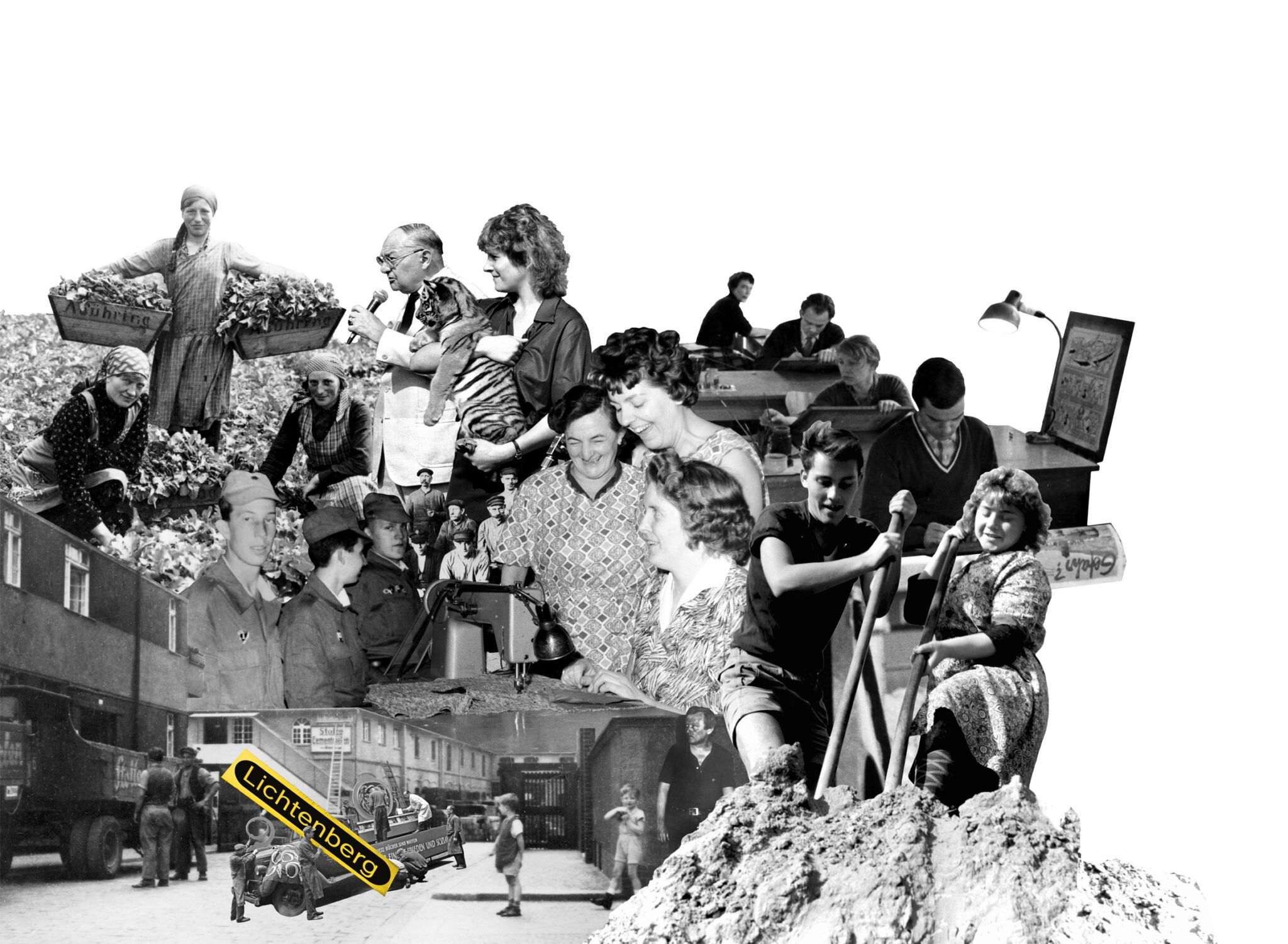
What was Lichtenberg yesterday? What is it today? And how are these related to each other? Museum Lichtenberg is a place where the past and present of the district of Lichtenberg come to life. Here, regional history becomes an experience. Here, there is space for freedom, for exchange, for learning and for creating. Here is Lichtenberg.

The museum has been located since 2006 in the Stadthaus in the neighborhood of Rummelsburg. The heart of the museum is the permanent exhibition. Its goal is to allow equal cultural participation. Special exhibitions, projects and events offer a contemporary view of special topics from history. The museum also includes a comprehensive archive with documents, historic records, objects and photos as well as a reference library.

A museum for everyone – this is the vision of Museum Lichtenberg. Together with the visitors, historical developments and the diversity of Lichtenberg are researched, discussed and co-organized. Everyone should have the chance to broaden their horizons. This is why all events of our program are free of charge.

The museum is a member of the Arbeitskreis Berliner Regionalmuseen (Working Group of Berlin Regional Museum, ABR) and works on different projects involving remembrance culture. The collaboration with local historical initiatives and associations is an important part of the work.

The Museum

Collage at Museum Lichtenberg
photo: Museum Lichtenberg

The history of Museum Lichtenberg is just as eventful as the history of Berlin. A “homeland archive” was set up here in 1934 and destroyed in 1944 in the Second World War. After initial attempts in the 1950s, an official “Ortschronik”, or record of local history, was founded in April of 1978. Over the course of many years of research and voluntary work, a loosely organized interest group compiled the history of the district, which had not been previously researched and was scarcely documented.

The collection of Lichtenberg’s history changed its name multiple times: from Ortschronik to Heimatgeschichtliche Kabinett to Heimatgeschichtliche Sammlung to Heimatmuseum. Since 2006, it has been named Museum Lichtenberg.

The location of the collection also changed again and again over the years. Until 1986, it was temporarily housed in numerous locations, always cramped, for example, in barracks on Harnackstraße. Moving to Deutschmeisterstraße in 1986 finally made designated rooms available for the collection’s presentation. With the merger of the districts of Lichtenberg and Hohenschönhausen in 2001, the collections of both districts were combined (see → Archive). In 2006, the collection moved into the renovated Stadthaus at Tuchollaplatz, formerly the city hall of Boxhagen-Rummelsburg. The museum celebrated the move with a new permanent exhibition. This permanent exhibition was redesigned in 2021 and since then makes Lichtenberg’s history accessible to a diverse audience through its inclusive, participatory and creative approach.

The Stadthaus
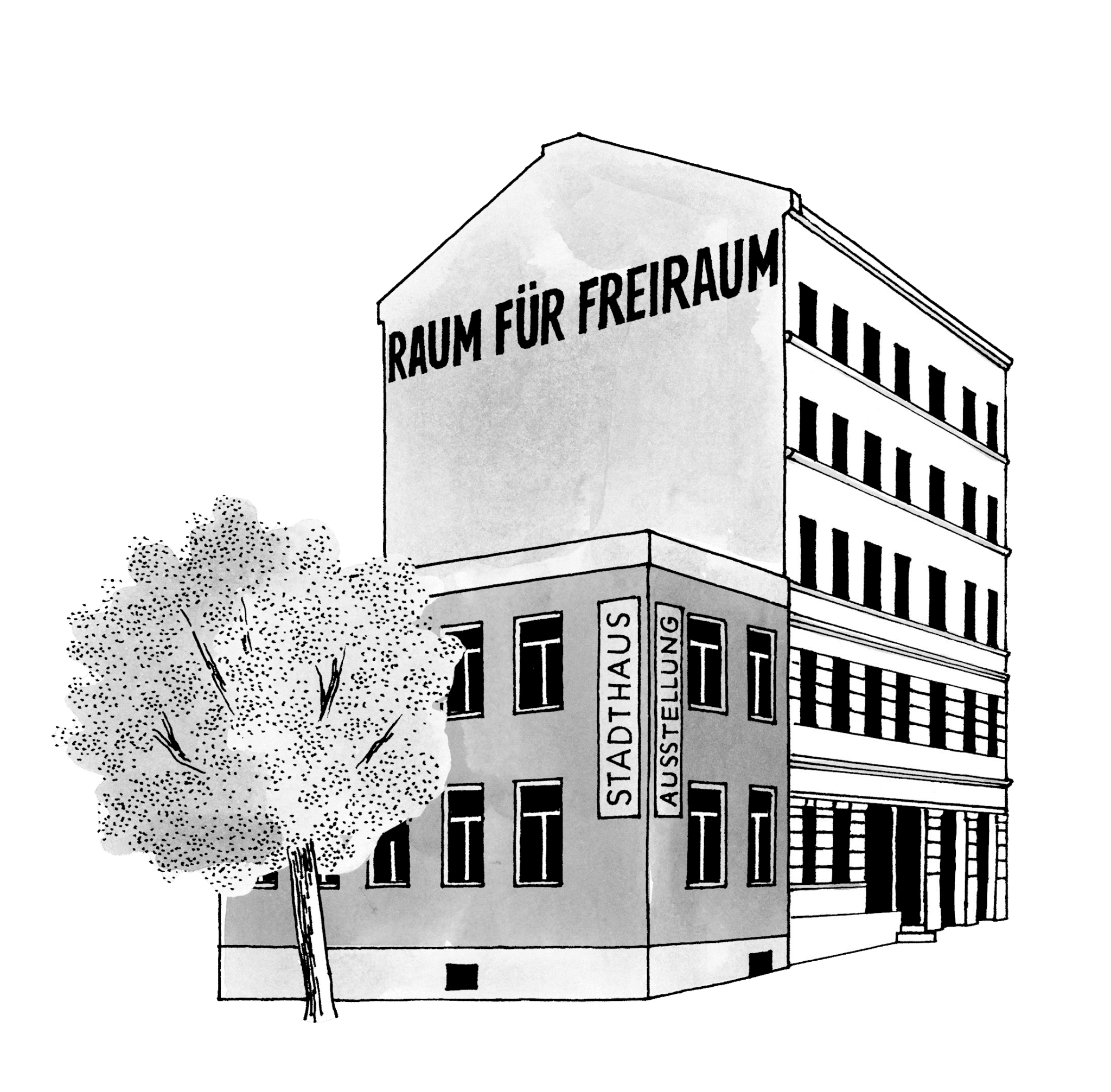
Black-and-white drawing of the Stadthaus
The Stadthaus (exterior view), Drawing by Hanna Zeckau

The museum’s premises in the Stadthaus extend over four buildings which used to be the city hall. The former city hall of Boxhagen-Rummelsburg from 1901 is a richly ornamented building with a large council hall. It was mostly destroyed during the Second World War in 1945. After 1949, the department of youth welfare and the department of adult education of the district of Lichtenberg were housed here; from 1989 to 1995, the department of education of the Lichtenberg district office was located here.

The entire complex of buildings underwent extensive renovation from 2003 to 2006 in order to create offices, archive and project spaces as well as an additional space for an exhibition. In 2005, the characteristic lettering “RAUM FÜR FREIRAUM”, or SPACE FOR FREEDOM, by the artist Luc Wolff was placed on the gable of the Stadthaus as art-in-architecture. It promotes empty spaces and an unoccupied public space and refers to the vacant part of this historic location, created through the destruction of the Second World War. It also refers to the rooms of the Stadthaus building and the spaces they provide, e. g. for artistic and cultural activities.

On August 18, 2006, Museum Lichtenberg moved into the Stadthaus and opened a permanent exhibition on the ground floor on October 27 of the same year. Additional spaces on the ground floor and the first floor are used for special exhibitions. A sponsoring association first worked in the upper floors of the Stadthaus. Today, the administration of the Fachbereich Museum und Geschichte (department of Museum and History) as well as the Fachbereich Kunst und Kultur (department of Art and Culture) have their offices here. The premises of an international artist residency are located on the top floor.

Team

General Inquiries / Visitor Service

info@museum-lichtenberg.de
Telephone: +49 (0)30/57797388 11

Administration

Sebastian Zgola

Interim Head of the Department for Museum and History

Daniela Bell
Head of the Office for Further Education and Culture

Director of the Archive and Collections

Dr. Dirk Moldt

Supporters Association

The supporters association Förderkreis Museum Lichtenberg im Stadthaus e.V. was founded in 1993. Its members support the museum by making its program, exhibitions and events more visible. Alongside the acquisition of external funds and donations, the association supports the museum in interviews with contemporary witnesses, the development of image documentation and by providing literature and visual material.
Anyone who would like to become a member of the supporters association can find the → membership application as a PDF file (in German) here..
The museum needs friends and supporters beyond its public funding. The supporters association is open for everyone interested in the history of Lichtenberg and its region and is always happy to welcome new members. The members meet regularly in order to plan joint activities. You too are warmly invited to work together with the association on behalf of the museum and make the diverse history of this exciting district more visible.

OFFICE
Förderkreis Museum Lichtenberg im Stadthaus e.V.
c/o Museum Lichtenberg im Stadthaus
Chair
Marianne Nedwed
Türrschmidtstr. 24
10317 Berlin
foerderkreis@museum-lichtenberg.de
The supporters association is a registered association in the register of associations of the district court and is recognized as a non-profit. The current valid bylaws from February 11, 2008 can be downloaded here as a PDF file.


BANK INFORMATION
Berliner Volksbank eG
IBAN: DE89 1009 0000 7461 6920 06
BIC: BEVODEBBXXX
Lichtenberg memorabilia

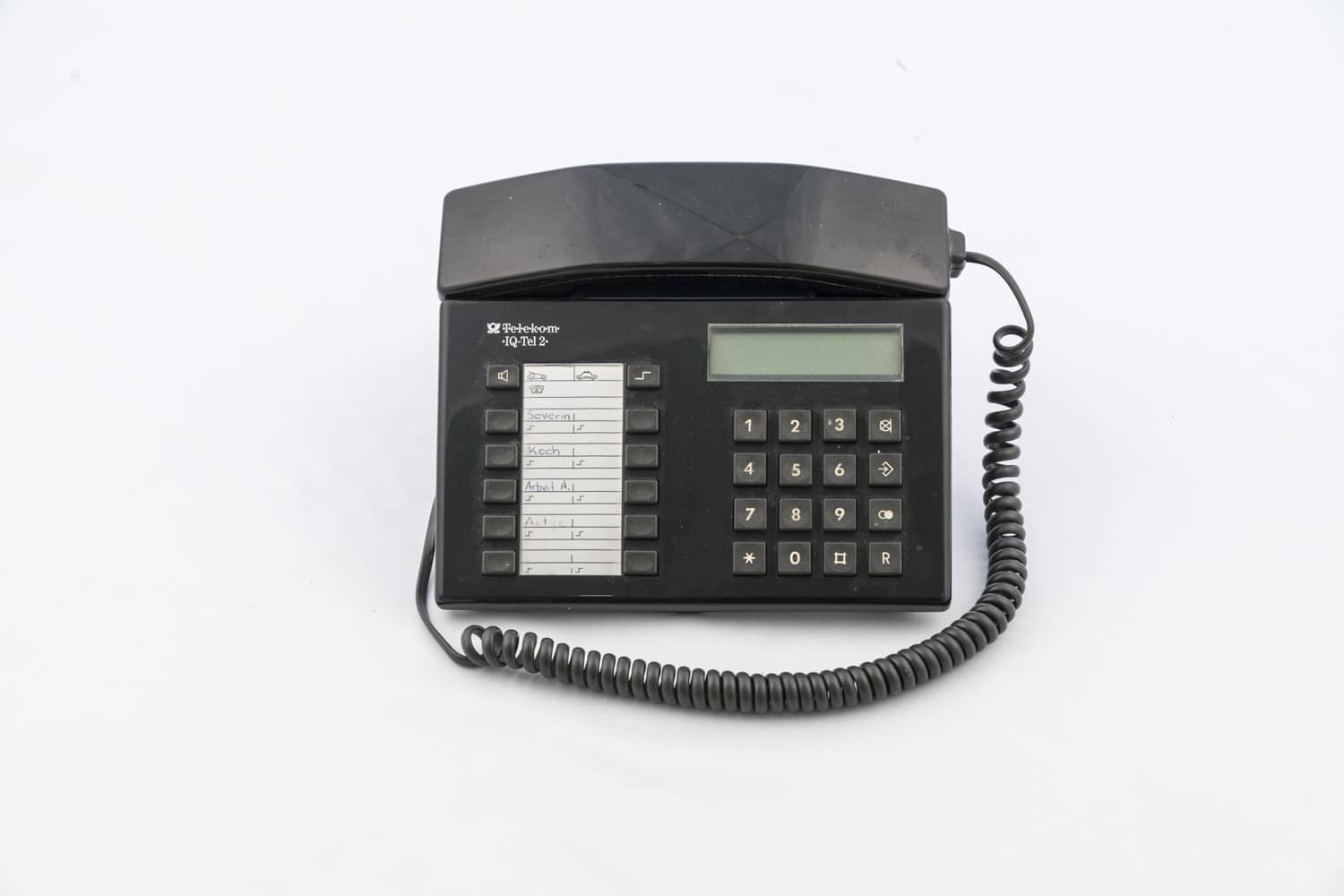
Black plastic push-button telephone

Black plastic push-button telephone

The narrator describes the story of a Telekom push-button telephone from the 80s. She and her boyfriend, who lived and worked in Prenzlauer Berg, lost contact after moving to Hohenschönhausen. In 1991, they got back in touch thanks to her boyfriend’s telephone line. After the death of her friend’s father, she moved in with him, they married and lived in Hohenschönhausen until her husband’s death in 2023. She found the phone that bridged the distance back then while cleaning up.

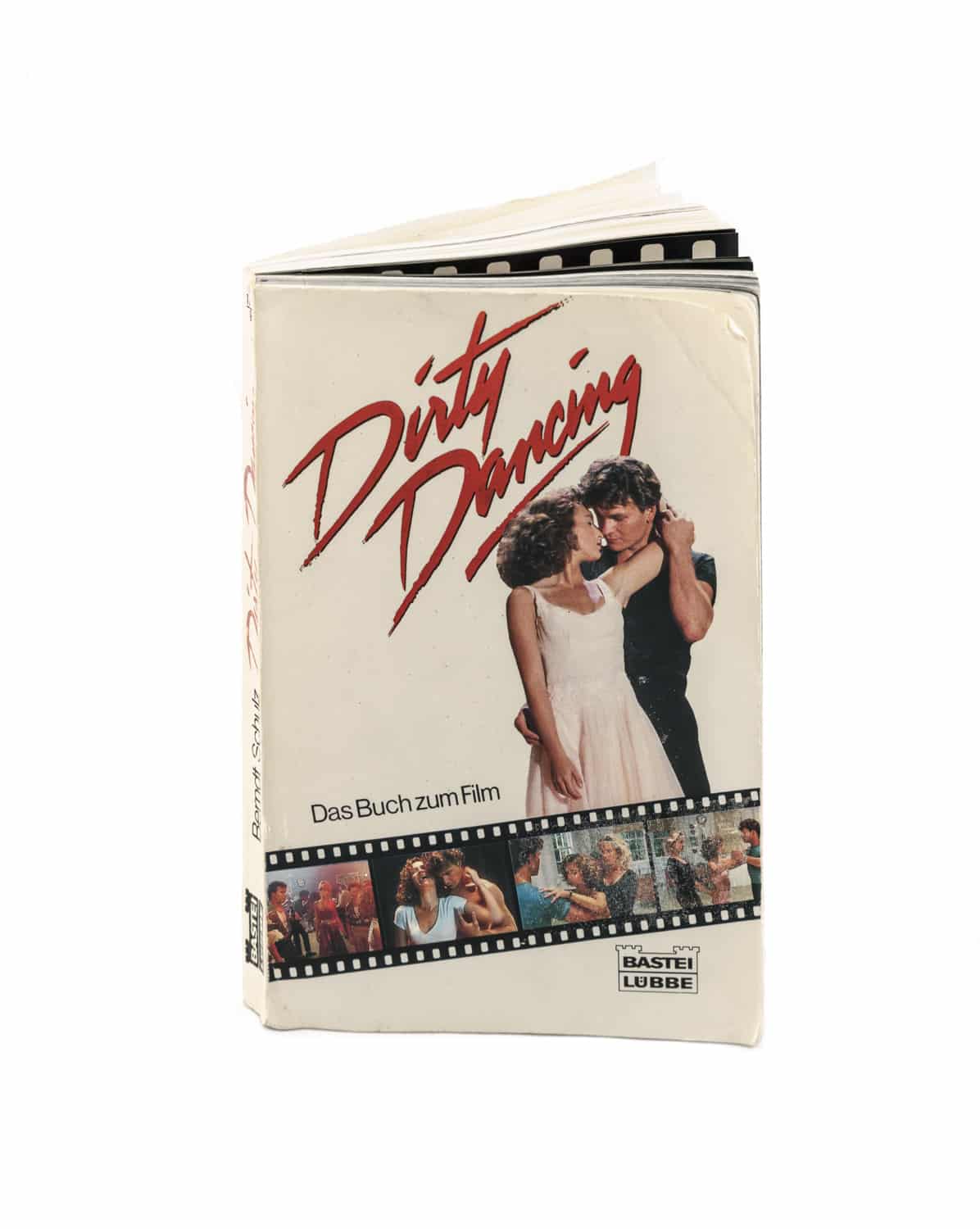
Book on the movie Dirty Dancing, with the iconic movie poster as cover picture

Dirty Dancing

The 1988 film “Dirty Dancing” was a huge success in the Federal Republic of Germany. It was also a box office hit in the GDR from June 1989, with over 4.5 million tickets sold. The author remembers her eleventh birthday, two days after the fall of the Berlin Wall, when she saw the movie in the cinema. The experience led her to travel to West Berlin with her mother to collect her welcome money. In West Berlin’s Kreuzberg district, she then discovered the book and the music to the film, which marked a personal “entry into capitalism”. The book and the music reflected the experience of puberty.

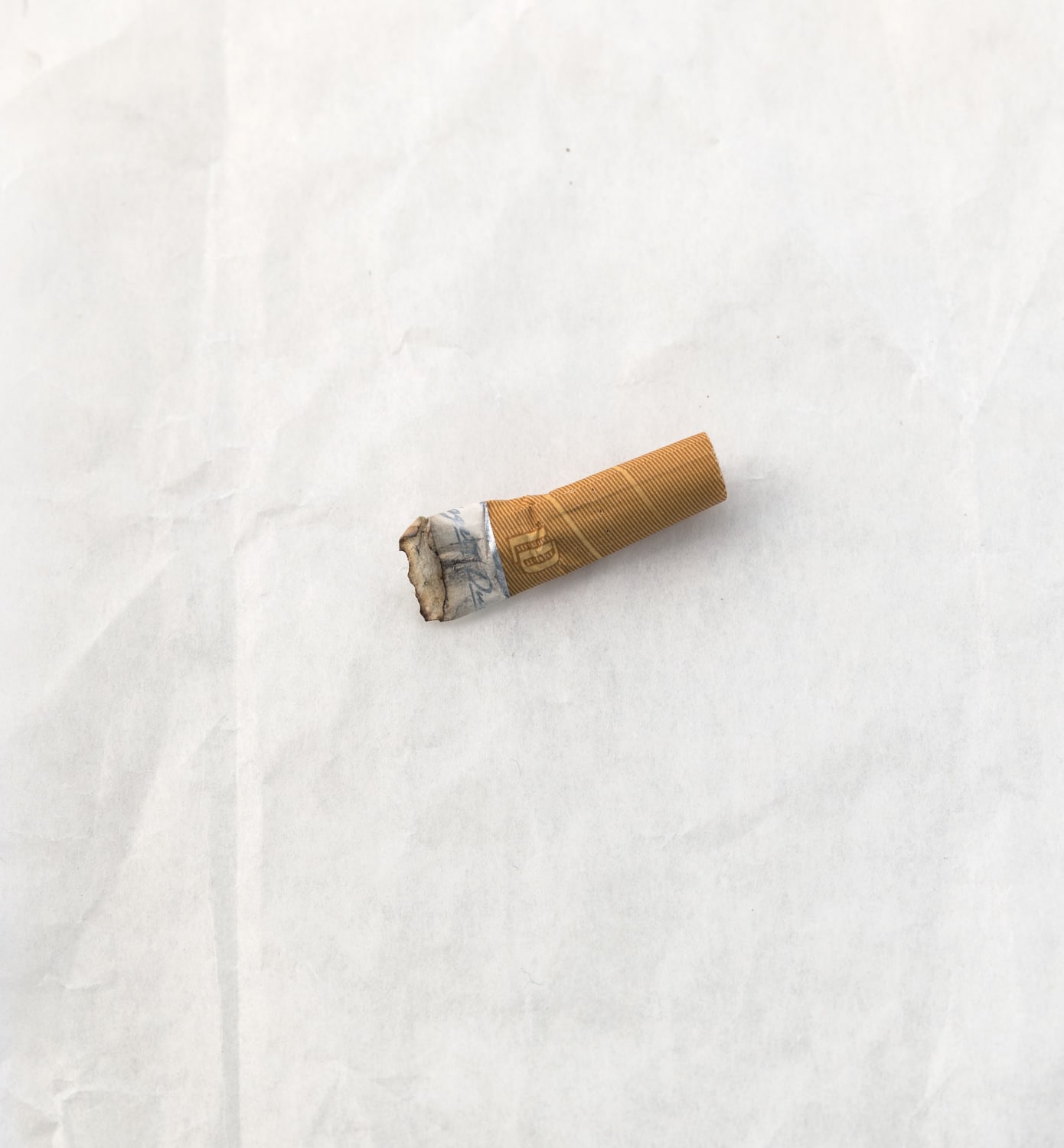
Cigarette butt

Cigarette butt

In Hinkelpark, a vocational school student talks about an incident of violence in the school playground when he was twelve years old. He smokes an LD cigarette and passes it on to the museum staff at the end of the conversation. During a conflict with an older pupil, he put down his cigarette and threw a punch. After a short time, his opponent was lying on the ground. The narrator finished his cigarette. The text emphasizes the everyday nature of school violence and the importance of offers of help such as social work, school psychologists and the telephone number against grief.

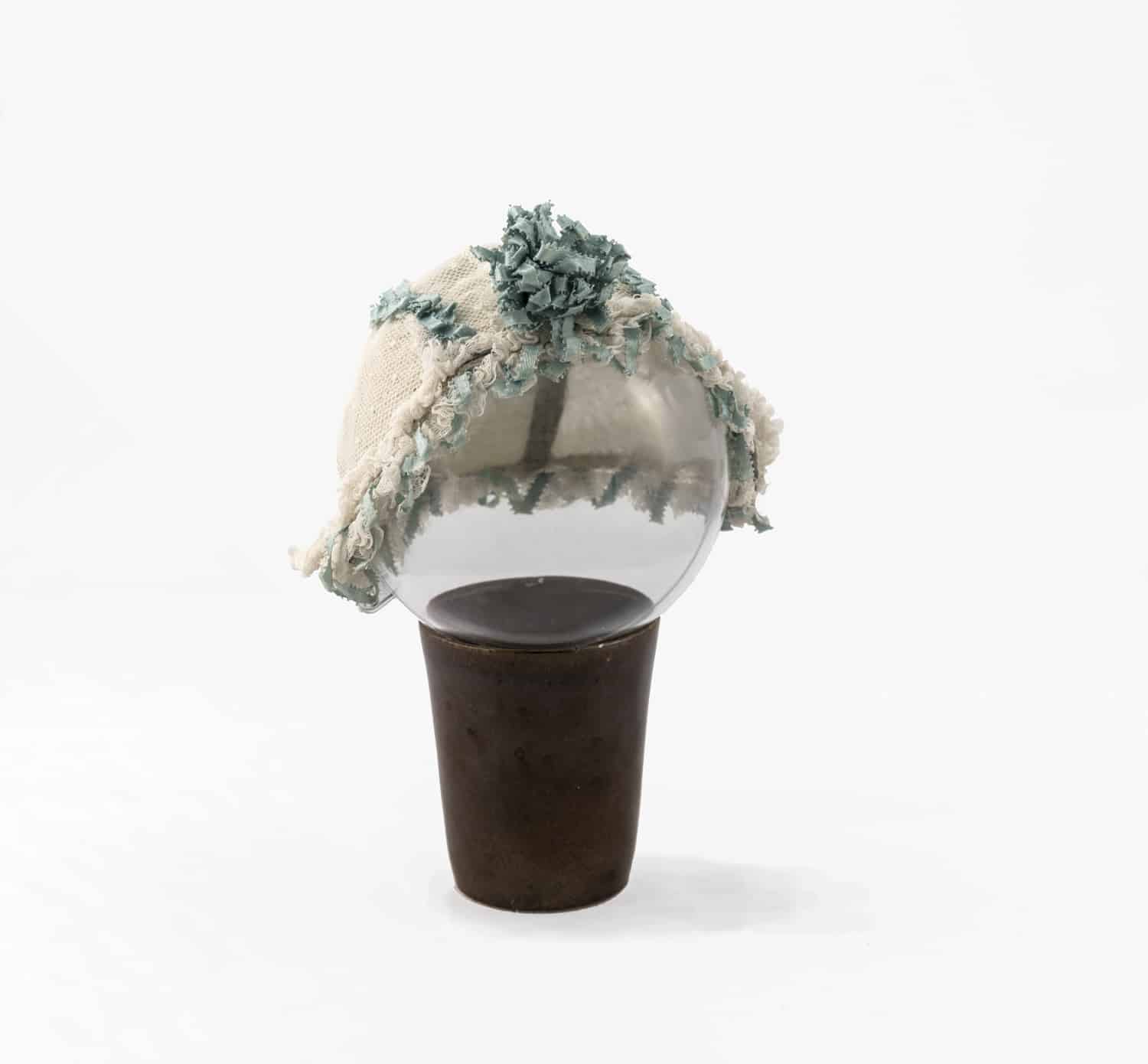
Christening bonnet

Christening bonnet

A delicate, 10 cm tall, hand-sewn christening bonnet made of white lace fabric on a silk base, edged with a light blue silk ribbon, is donated to the Lichtenberg Museum by Mrs. Tschersich, 94 years old. It belongs to her father, who was born in Peterswaldau in 1899 and baptized in 1900. The bonnet, a family heirloom, survived the war and the family’s flight from Silesia. Her father, a bank clerk, was injured in the Volkssturm in 1945 and the family experienced the looting of their home by Soviet soldiers. The baptismal cap remained intact. After the move to Berlin and the parents’ subsequent move to the West, Mrs. Tschersich kept the bonnet as a memento of her father. She now donates it to the museum as she feared it would be lost after her death.

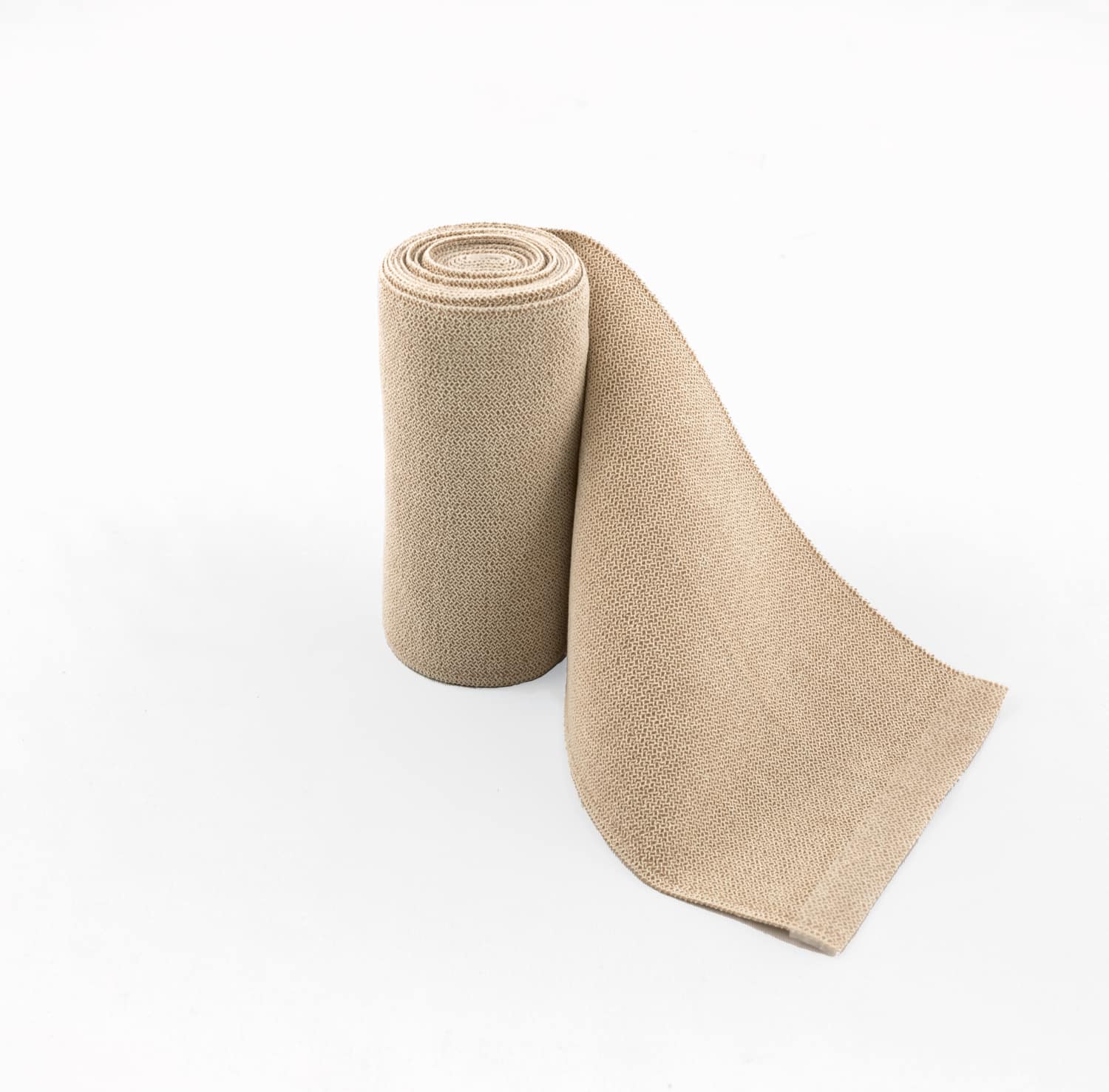
Elastic bandage, beige, standing

Elastic bandage, beige, standing

On June 5, 2023, a man who was released from the Sana Clinic Lichtenberg on the same day handed over an unused, beige elastic bandage (1.50 m long, 12 cm wide) to the museum. Three weeks earlier, the homeless philosopher from Namibia had collapsed on the street and his rucksack had been stolen. In hospital, he was diagnosed with a viral infection as well as the consequences of his fall. The clinic treated him for three weeks and for the first time he felt like a human being. He was impressed by the human help at the hospital and handed over the armband as a sign of gratitude for the care he received.

This site is registered on wpml.org as a development site. Switch to a production site key to remove this banner.